For a long time, the best cybersecurity for thousands of small and medium-sized enterprises was simply that they were not an interesting victim. Attacking required knowledge, time, and patience, and attackers preferred large, profitable targets. An SME with an un-updated server survived simply because no one had time to notice it.
Machines now have that time.
“"Previously, a small company thought it wasn't interesting to anyone, but nowadays, just being exposed is enough."
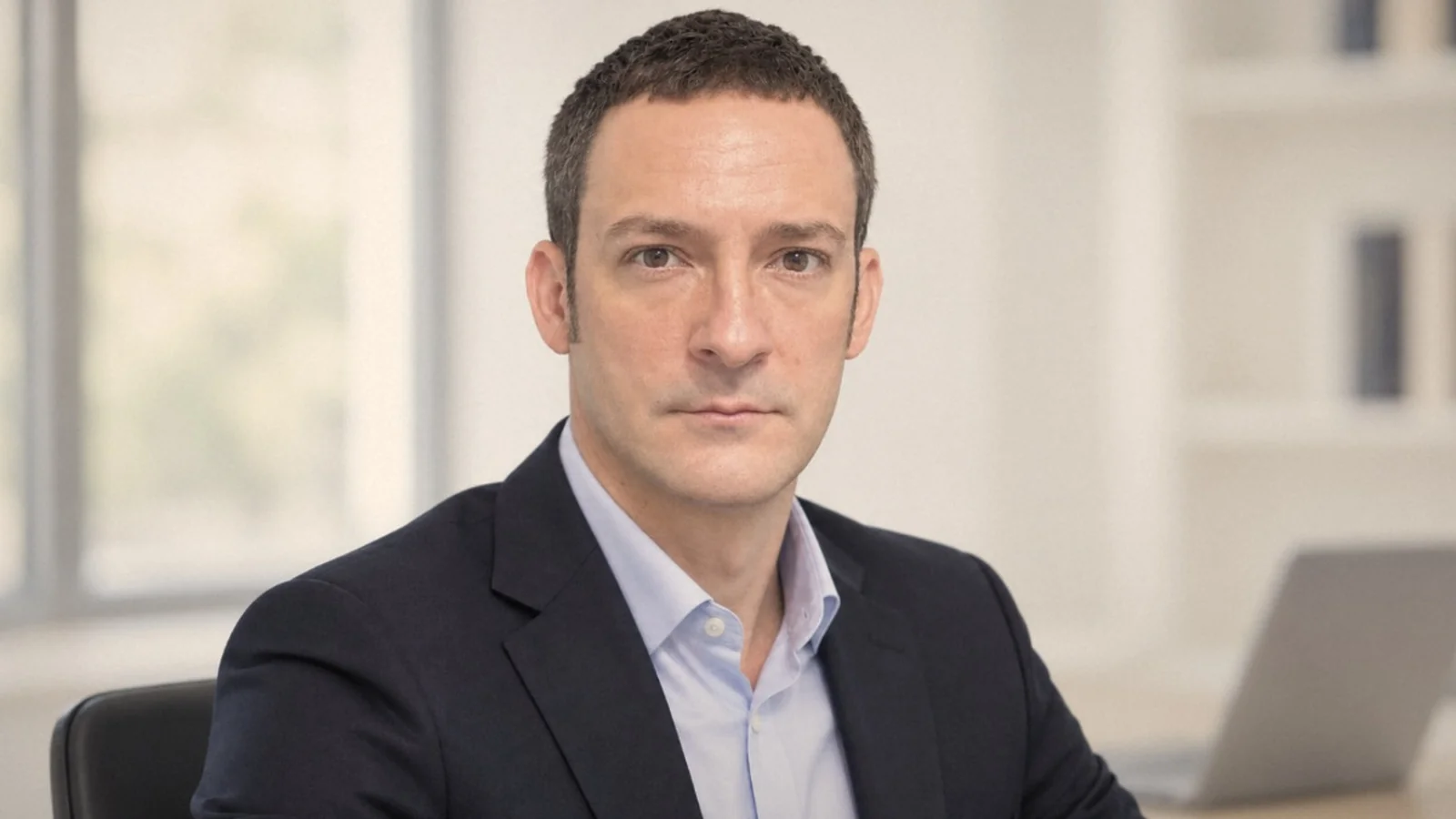
According to José Carlos Rueda Álvarez, a lawyer and partner at the Seville-based firm Bandua Legal, specialising in technology law, artificial intelligence has democratised hacking.
Why does AI make any company a potential target?
Automatic scanners that scour the internet for vulnerable systems have existed for years. What has changed is everything that comes afterwards. AI tools now allow a newly published vulnerability to be understood, the code to exploit it to be prepared, and it to be launched against thousands of systems within hours, without needing to be an expert.
According to José Carlos Rueda, the attacker no longer chooses their victim; they are just one among many on a list. A critical flaw might be published on a Tuesday, and by Wednesday, programs are already testing it against all companies that have it, at any time of day or week. "It's nothing personal, it's statistics," he notes.
Faced with this, many companies still rely on an annual or semi-annual security review, which the lawyer compares to locking the door twice a year, highlighting that in the past year, they have seen an increase in inquiries from companies that have suffered an incident and were unaware of their obligations.
What does the NIS2 directive require of companies?
The change is not just technical. European regulations now demand the same from companies as attackers do: continuous vigilance.
The European NIS2 directive significantly expands the number of companies required to manage their cybersecurity risks. It no longer just includes banks or energy companies, but also sectors with a significant presence in Andalusia, such as food, manufacturing, logistics, waste management, and digital services. The measures it requires include incident management, business continuity, supply chain security, vulnerability management, and multi-factor authentication.
José Carlos Rueda warns that the impact on Andalusia's business fabric extends beyond directly obligated companies. Many Andalusian SMEs are suppliers to large agri-food, industrial, or logistics companies subject to NIS2, which must monitor their supply chains and, consequently, will begin to demand cybersecurity guarantees from their suppliers. Those unable to provide them, the lawyer points out, risk being excluded.
Deadlines are also measured in hours. In the event of a significant incident, NIS2 requires an early warning within 24 hours and a full notification within 72, the same timeframe the General Data Protection Regulation sets for personal data breaches. And from September 2026, the Cyber Resilience Act will require manufacturers of products with digital components to notify actively exploited vulnerabilities within 24 hours.
If the attacker works in hours, the Seville-based lawyer reasons, the law requires a reaction within hours. Many companies discover these deadlines in the midst of a crisis, when it is already almost impossible to meet them.
Artificial intelligence is not only on the side of the attackers. Companies using it also have their own obligations under the European Artificial Intelligence Act (AIA). From February 2025, they must ensure their staff have sufficient knowledge to use these tools, and high-risk systems must be resistant to attacks and manipulation. José Carlos Rueda warns that many companies have incorporated AI assistants without considering what data their employees enter or who can access it, opening a new door for both attackers and claims.
Are directors liable for a cyberattack?
The most significant underlying change is who is liable. NIS2 requires management bodies to approve cybersecurity measures, oversee their implementation, and receive training, and provides for them to be held responsible if they are not complied with. The fines set by the directive can reach €10 million or 2% of global annual turnover, whichever is greater, for essential entities, and €7 million or 1.4% for important ones. These are in addition to data protection sanctions and potential claims from affected customers.
José Carlos Rueda recalls that directors have always had a duty of care, and what's new is that cybersecurity is now an explicit part of that duty. "Saying 'the IT guy handled that' is no longer a defence," he states.
“"Saying 'the IT guy handled that' is no longer a defence."
Is a company liable if it suffers a cyberattack?
The cybersecurity world has been working for years with one idea: assume the attack will happen. In the lawyer's opinion, companies should also apply this in legal terms, assuming that something will eventually go wrong and they must be prepared for it.
The difference is enormous. Suffering a cyberattack does not automatically make a company liable, because the obligation is one of means, not of results. The Court of Justice of the European Union has established that criminals accessing data does not in itself mean that the company's measures were inadequate, but it also reminds us that it is the company that must prove they were adequate.
That's the key, according to José Carlos Rueda. When facing a claimant or the authorities, a company with documented measures, approved by management, reviewed, and with an incident protocol that has been followed, has arguments. One that has nothing in writing is alone when facing a claim, even if the culprit is a criminal on the other side of the world.
In practice, the victim of the attack may end up paying twice: first for the damage of the incident, and then for sanctions, compensation to clients, and also to affected third parties. Preventing the attack 100% is impossible, the lawyer acknowledges, but preventing it from also becoming the company's responsibility is, to a large extent, in its hands.
The good news, he adds, is that much of this preparation involves organisation and documentation, not large investments. The bad news is that it must be done beforehand. "On the day of the attack, nothing can be prepared, and you can only prove what was already done," concludes José Carlos Rueda.
“"Assume you will be hacked and prepare not to be held responsible for the criminals. The question is whether you will be able to prove you did everything possible to prevent it."
Who is José Carlos Rueda?
José Carlos Rueda Álvarez is a lawyer in Seville specialising in technology law, cybersecurity, and regulatory compliance, fields he has worked in for over ten years. He is a partner at Bandua Legal, a Seville-based firm that works in civil, business, technology, economic criminal, and military law.
His profile combines two worlds that rarely overlap. A lawyer by profession and a developer in his free time, he understands the inner workings of systems, which he then analyses from a legal perspective. This dual training allows him to understand the technical evidence of an incident, speak the same language as IT teams, and translate technological risks into concrete legal obligations for company management.
From his personal website, jcrueda.com, he writes legal articles and maintains an index of IT vulnerabilities explained in clear language, designed for companies and professionals to fulfil their duty of care without needing to be experts.