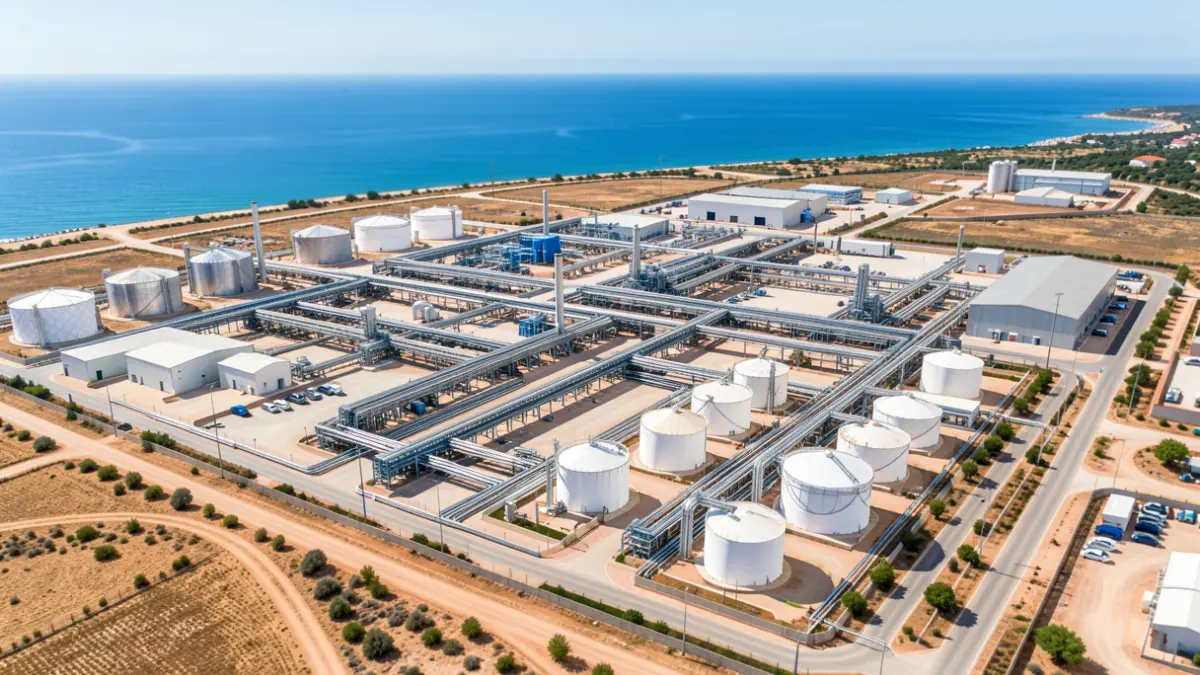
The industrial facility, known as the Green Meiga project, will be relocated to Huelva following a technical and economic review that determined the need to modify its original location in Begonte (Lugo) to ensure its long-term viability. This decision strengthens Huelva's standing as a key center for the production of green hydrogen and sustainable fuels in southern Europe.
The project will receive 122.9 million euros in public funding and is expected to produce 100,000 tons annually of green methanol, a crucial fuel for decarbonizing maritime transport and various industrial processes. The initiative also anticipates a significant impact on employment, with an estimated creation of up to 6,000 jobs during the construction phase and over 400 jobs permanently during the operational stage. The plant is scheduled to commence operations in 2029.
This investment is in addition to two other major green hydrogen projects by Iberdrola in Huelva, Noon II and Odin, which will receive 389.5 million euros from the Government of Spain. These projects, selected in the second national call for capacity auctions as a service (AaaS), reinforce the company's commitment to the Huelva province as a hub for renewable hydrogen development.
The arrival of Green Meiga is part of the expansion of Huelva's industrial ecosystem focused on green molecules. The province is attracting multi-million euro investments thanks to its energy infrastructure, logistical capacity, industrial fabric, and port access, positioning itself as a leader in the energy transition and new decarbonized industries.
The project involves the participation of Foresa, specializing in chemical products, and Magnon, the renewable energy subsidiary of the Ence group. Green methanol, produced from renewable hydrogen and captured carbon, is considered a fuel with high growth potential for applications in synthetic fuels, the chemical industry, construction materials, and maritime transport.