
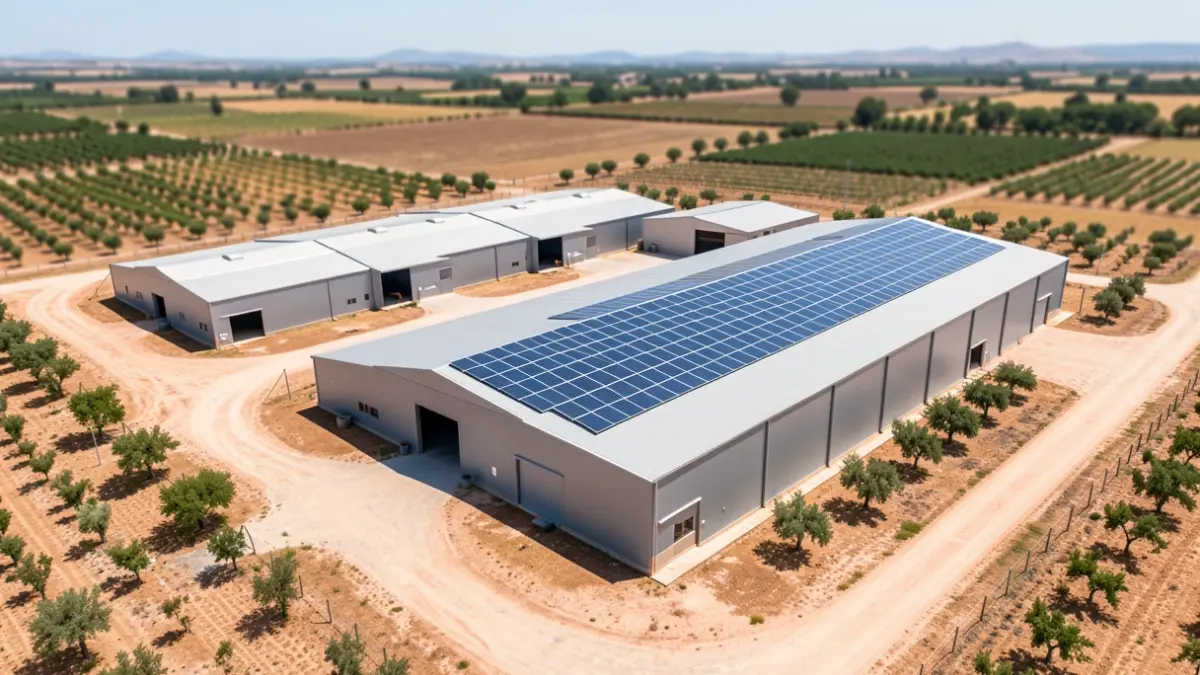
A local developer has begun the process for the Unified Environmental Authorization (AAU) for a poultry facility in the Loma Morales area. The current farm has two sheds housing 55,000 birds, and the project includes building a third industrial shed over 1,700 square meters. With this expansion, the farm will achieve an annual production of nearly 453,000 animals, translating to almost 1.2 million kilos of meat and over two million kilos of feed annually.
To minimize disturbances to urban centers, located approximately 2.9 kilometers away, a strict "all in, all out" cleaning protocol will be implemented. This system prohibits prolonged storage of poultry manure and ensures immediate removal of accumulated dung, thereby preventing organic decomposition, odors, and pests. Hazardous waste and dead animals will be managed in hermetically sealed containers.
The project emphasizes animal welfare as a central focus. An automated system will monitor temperature, humidity, and ventilation, activating cooling and extraction systems as needed. Carbon dioxide and ammonia concentrations will be controlled. Air renewal will occur through dynamic negative pressure ventilation, keeping the bedding dry and reducing gas accumulation. Automated feeder and drinker lines will ensure ideal comfort conditions.
Regarding energy sustainability, shed two already features a photovoltaic plant for self-consumption with nearly 27 peak kilowatts, covering 40-50% of daily electricity demand. A capacitor bank will be included to correct reactive energy and reduce the carbon footprint. The acoustic study confirms compliance with Andalusian regulations, ensuring the new shed's operation will be "imperceptible" to nearby rural homes.
Job creation will be limited. The 60-day construction phase will employ five workers. During operation, high automation will require a single full-time supervisor, with up to four additional workers for specific tasks like loading livestock. The business model anticipates a gross annual turnover of approximately 245,000 euros.