
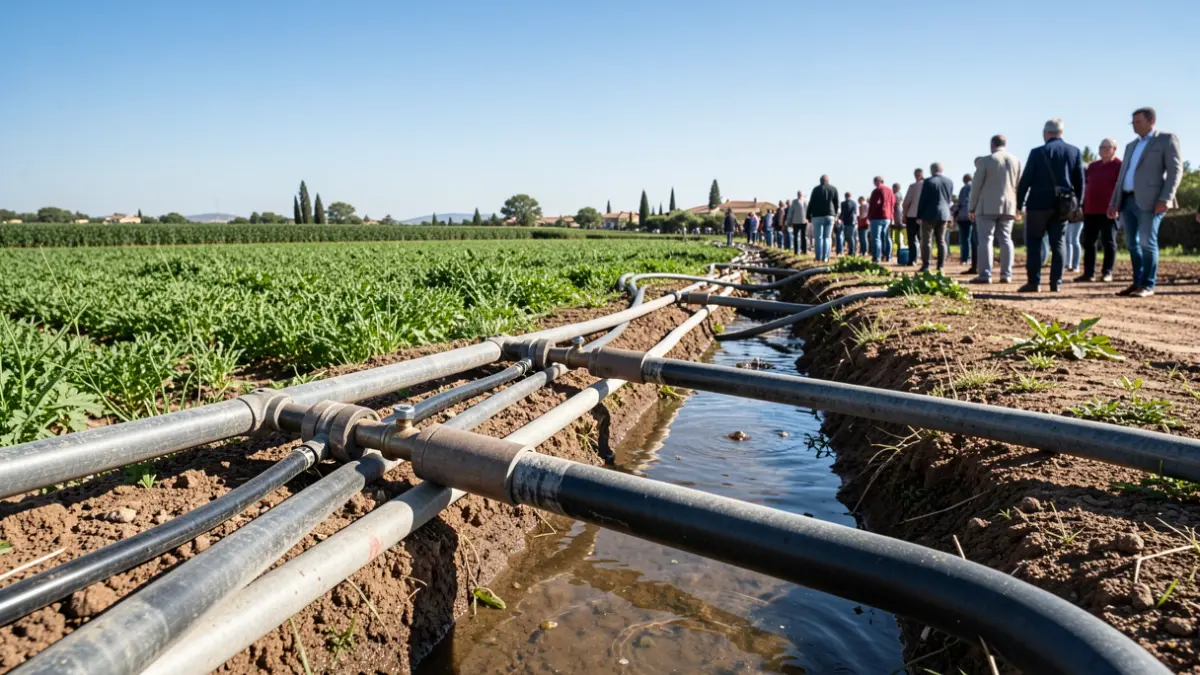
The signing of the agreements to execute these works took place this Thursday in Seville, involving the Junta de Andalucía, the State Society for Agrarian Infrastructures (Seiasa), and the beneficiary irrigation communities. The project in Cádiz focuses on improving the water and energy efficiency of the Guadalcacín facilities, a key area for provincial irrigation.
This intervention plan extends to six Andalusian provinces and aims to modernize irrigation systems, integrate renewable energies, and strengthen water control. In total, the Plan RegadíA covers eleven projects distributed across Córdoba, Almería, Jaén, Cádiz, Granada, and Seville, benefiting 14,490 irrigators and 102,495 hectares.
The total investment of 138.3 million euros is shared among the Junta de Andalucía (52.5 million), Seiasa (20%), and the irrigation communities (30%). The event was attended by the Minister of Agriculture, Ramón Fernández-Pacheco, and the Secretary of State for Agriculture, Begoña García, among other officials.
The planned actions include adopting new technologies to optimize water use and reduce energy consumption, such as photovoltaic installations for pumping systems and digital control systems for real-time consumption monitoring. In Guadalcacín, modernization aims to improve performance and reduce energy costs, in response to water restrictions and rising energy prices.
The minister highlighted that the Plan RegadíA is part of a broader strategy for the Andalusian agricultural sector, which includes the future Law on Sustainable Irrigation and programs like PARRA for reclaimed water. Irrigation modernization is crucial for the viability of farms in provinces like Cádiz, given the importance of irrigated agriculture in the Jerez countryside and the Guadalcacín reservoir area.